
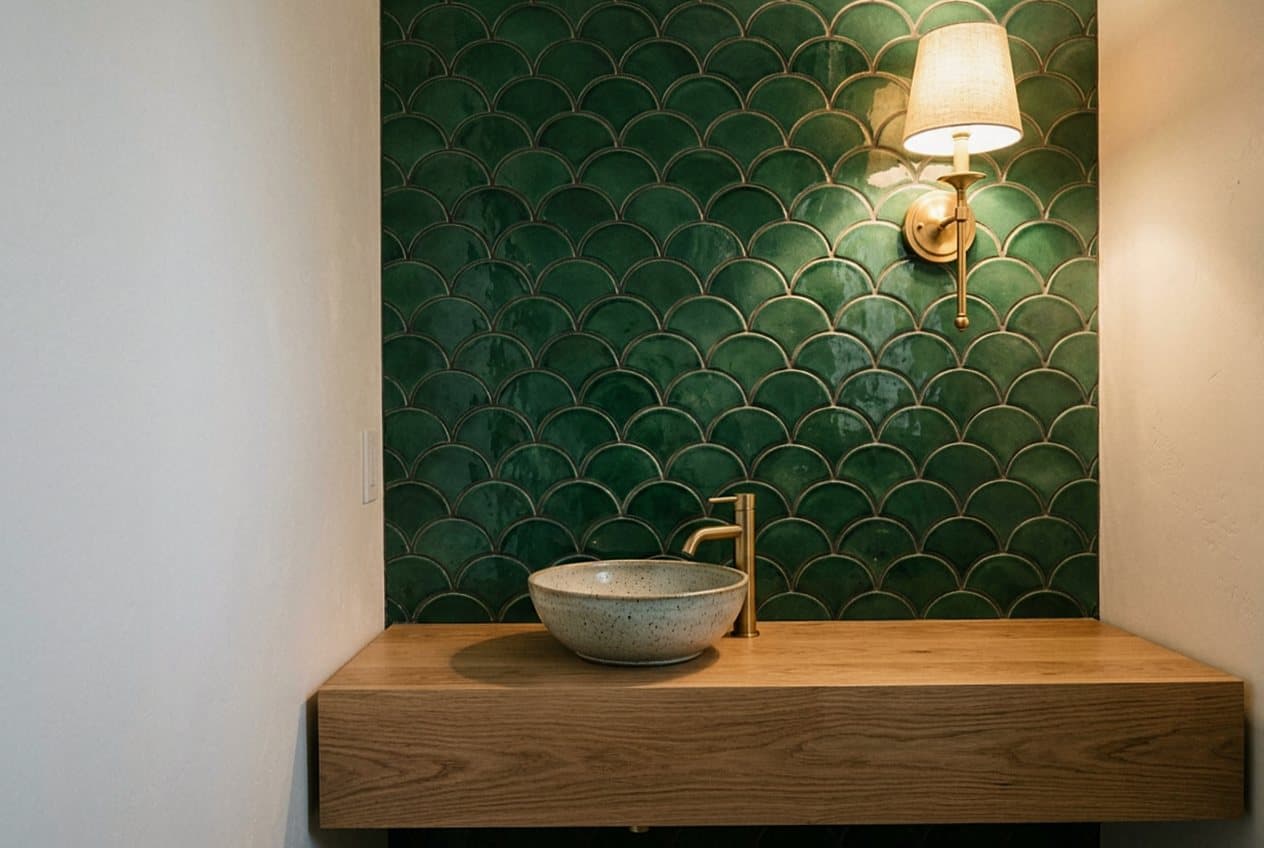
What a bathroom remodel looks like in a Sterling Heights home
Most bathrooms we work on in Sterling Heights sit in brick ranches and colonials built between the 1950s and the 1980s. The layouts repeat. A small main bath off the hall, a tub with a tiled surround, one window, and a vanity crowded against the door swing. Those rooms were built well for their time. What fails is almost never the framing. It is the tile and the layer under it. Older surrounds were set over paper faced drywall or plain backer with no membrane at all. Water works past the grout, sits in the wall cavity, and the first sign is a soft spot near the tub deck or a stain on the ceiling below. We open the wall and look before we hand you a plan, because the fix depends on what is back there. Sometimes the studs are dry and we rebuild the surround. Sometimes the subfloor around the toilet flange has gone dark and spongy, and that has to come out first. We tell you which one it is and we show you. Our crew handles the demolition, any framing changes, backer and membrane, the shower pan, all the tile, and the setting of the fixtures you pick. We run the whole room in one push rather than leaving it torn open for weeks. Before a single wall comes down we protect the hallway, cover the floor along the path we are using, and seal the room opening for dust. A bathroom is often the only one on that floor of the house, so we plan the days the room is out of service and give you that number up front. Homes near Dodge Park and off Utica Road get the same approach as the newer builds closer to Hall Road. Old or new, the room only lasts if water has nowhere to go but the drain.
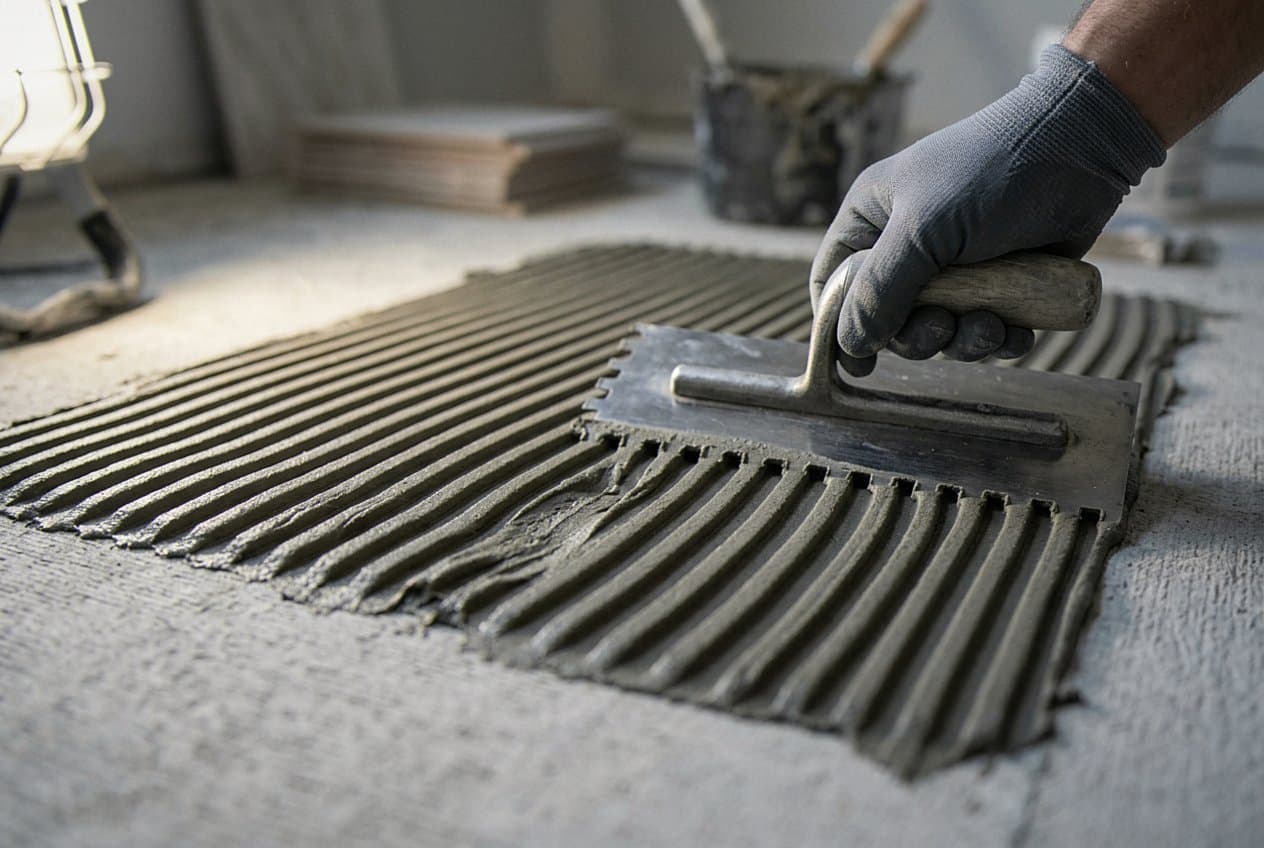
A remodel runs in a set order, and skipping a step is what brings us back later. First we protect the house and take the room apart down to studs and subfloor. Then we look at it. Soft framing, rot at the flange, an old drain line that is ready to fail, all of that comes out while the wall is open, because that is the only cheap moment to touch it. Plumbing and wiring come next if the layout is changing. We reset the valve height, move the drain if the shower is growing, and run the vent fan out through the wall or roof instead of into the attic. Plenty of the older homes we open up in Macomb County have a fan that dumps warm wet air straight into the roof space. That is where the mold turns up two winters later. After the rough work, backer and membrane go on, the pan gets built, and we flood test it. Only then does tile start. Wall tile, then floor, then grout, then glass and fixtures. Cure time is real and we do not rush it. Mortar under a floor has to set before anyone walks on it, and grout needs time before sealer or heavy water. We tell you which days matter so you are not waiting on us with no explanation. Most full remodels in a room this size run a few weeks from tear out to the last piece of trim. The parts that stretch are usually the ones outside the room, like a shower door that has to be measured after the tile is set and then built. We order what we can ahead of time so the room is not sitting finished and waiting on a box.
- One crew from demolition through the last piece of trim. You are not chasing a tile setter, a plumber, and a floor guy who each point at the other when something is off. We tear out, frame, waterproof, set tile, and hang the fixtures. Because the same people who open the wall are the people who close it, nothing gets buried that should have been dealt with. If we find rot behind the tub we tell you the day we find it, we send you the photo, and we tell you what it changes about the schedule and the scope before we go further.
- Waterproofing that goes in before the tile, not after. Tile and grout are not waterproof on their own. Water moves through grout joints every time somebody showers, and it has to hit a barrier somewhere. We set a sheet membrane or a foam board system over the backer, band every inside corner and every seam, and seal the pipe and drain penetrations by hand. Then we flood test the pan before one tile goes down. That test is the part nobody ever sees and the part that decides whether the room holds up. We leave water standing in the pan overnight and we photograph the level, so you know the floor under your shower was checked and not just assumed.
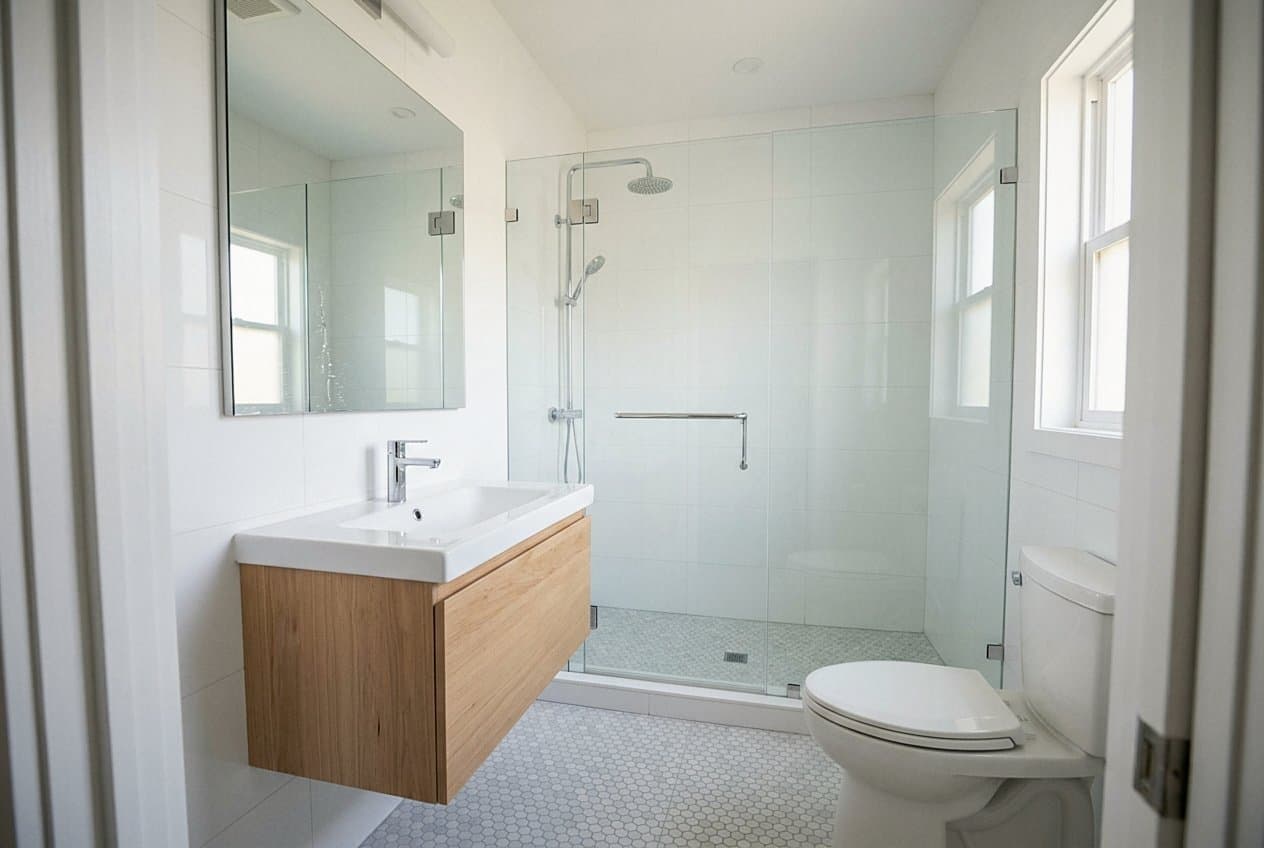
- Layouts that fit the room you actually have. Small hall baths in Sterling Heights waste a foot of space on a door swing or a vanity that is too deep for the walkway. We look at moving the door, swapping a hinged door for a slider, or trading a tub nobody uses for a shower with a low curb that is easy to step over. If a parent is aging in place, we block the walls behind the tile while the studs are open so grab bars can be mounted later in the right spots. That costs almost nothing now and saves tearing tile off then.
- Dust control and a schedule you can plan around. We seal the doorway, cover the path from the entry to the bathroom, and clean the work area at the end of every day. Demolition dust is the part homeowners remember longest, and it is the part we work hardest to keep inside one room. You get a plan that says which days the room is unusable and which days it is only messy. If the house has one full bath, we sequence the work to hand it back to you as fast as the mortar and the grout will let us.
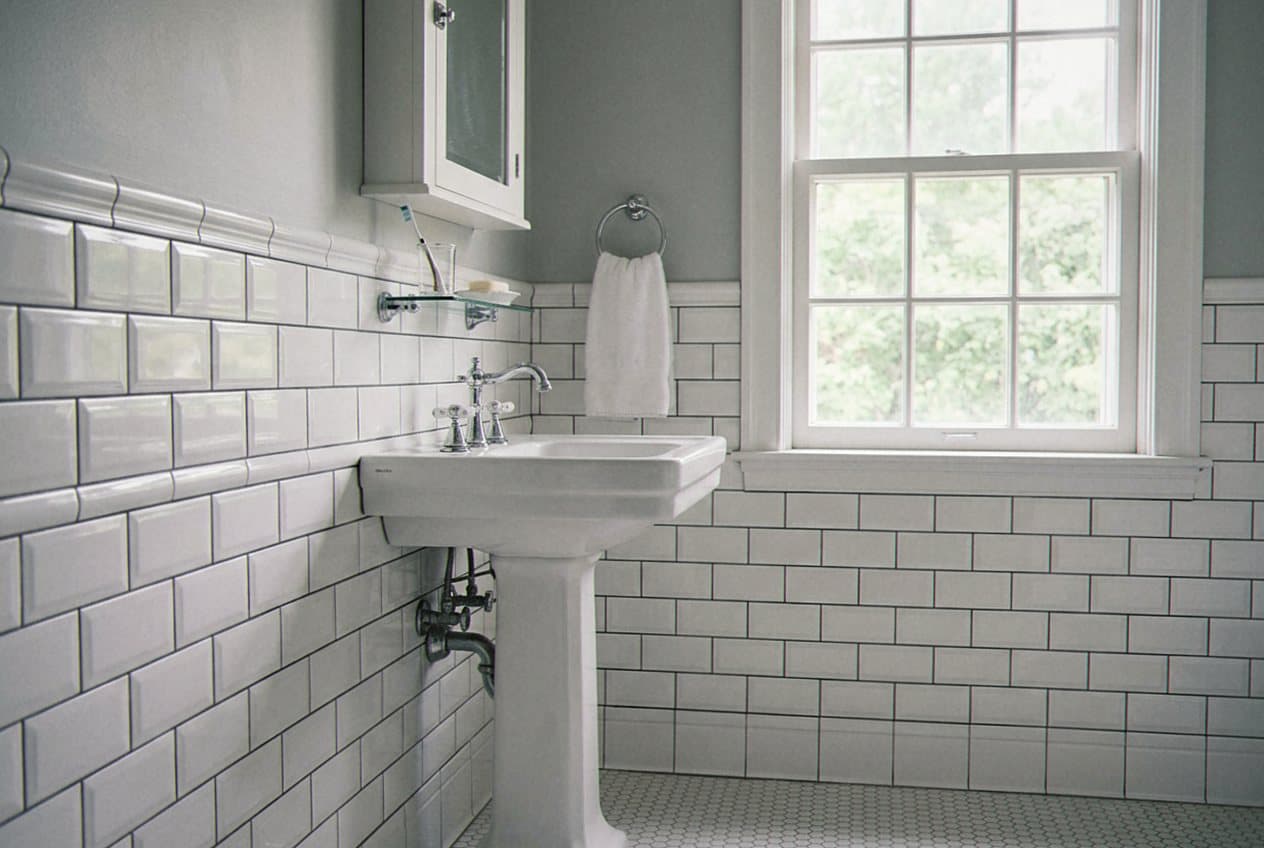
- Tile work that lines up where the eye lands. Anybody can stick tile on a wall. The difference shows at the inside corners, around the valve, inside the niche, and where the wall tile meets the floor. We lay the field out dry before we set anything, so you do not end up with a sliver cut on the wall you stare at from the door. Niches get centered between studs and framed so the pattern runs into them clean. Edges get a metal profile or a mitered corner instead of a plastic strip that yellows.
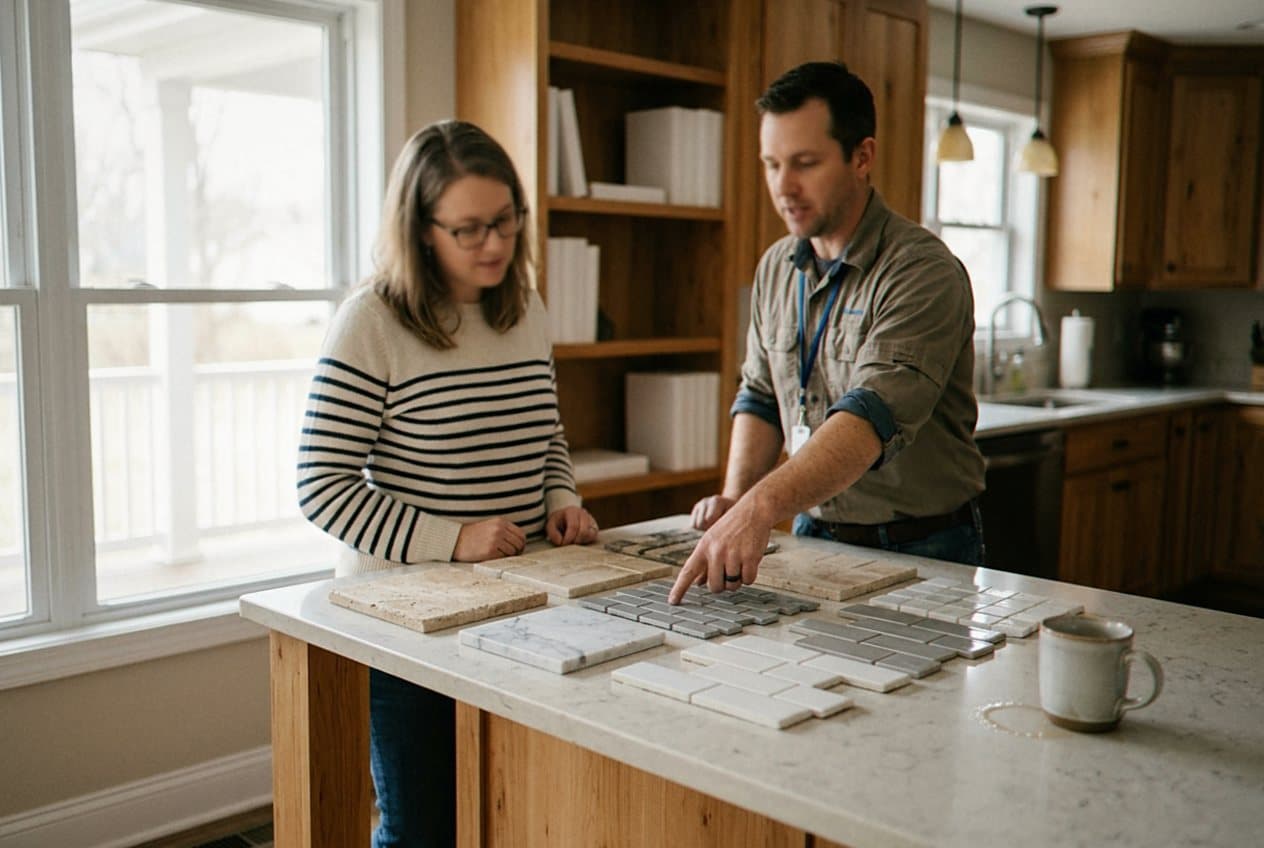
The choices that change how the room lives are smaller than most people expect. Floor tile needs enough grip that a wet foot does not slide, so we steer people toward a textured finish or a smaller tile with more grout lines underfoot. Big polished tile looks great in a photo and turns slick the second somebody steps out of the shower. Grout color matters more than tile color for how the room ages. A mid tone gray or greige hides the traffic pattern by the vanity. Bright white grout on a floor is beautiful for about four months. We use grout that resists staining, and we still tell you to keep a squeegee in the shower, because our water leaves mineral spots on glass and on dark tile. Through a Michigan winter the room swings from hot steam to a cold outside wall and back again, twice a day. That swing is hard on a wall that was never sealed right. It is one more reason we care about the membrane and about a fan that actually moves air. On fixtures, we will install what you buy, and we will tell you before you buy it if a piece is going to fight the room. A vanity too wide for the door swing. A shower arm that lands on a stud. A niche that wants to sit exactly where a vent pipe already runs. All of those are easy to solve on paper and expensive to solve after demolition. Wall tile size is worth a minute of thought too. A tall tile run vertically makes a low ceiling read higher, and a wide format tile cuts the number of grout lines you have to wipe down, but it also needs a flatter wall under it than most old framing gives you. We check the walls with a straightedge and float them where they are wavy, because a tile that spans more surface will telegraph every dip in the framing. Bring us a photo of a bathroom you like and we will tell you honestly what it takes to get there in your space, and where the room you have will fight it.
If your bathroom needs more than a fresh coat of paint, call us and we will come look at it. We will tell you what we see behind the tile, what has to be replaced, and what can stay. You get a written scope, the order we do the work in, and the number of days the room is out. No pressure to decide while we are standing there. We remodel bathrooms across Sterling Heights, Utica, Shelby Township, Warren, Clinton Township, and Fraser, and we answer our own phone when you call. Tell us what is wrong with the room you have and what you want it to be. We will tell you straight whether it is a surround rebuild or a full gut, and we will not push the bigger job when the smaller one is the right call.