Tile floors set by our own crew
A tile floor lives or dies below the tile. What you see is the surface. What decides whether it lasts is the wood or the slab under it, and that is where most of our day goes. We install tile floors all over Sterling Heights, and the homes here fall into a few clear groups. The brick ranches built in the 1950s and 1960s sit on plank or plywood subfloors that have flexed for sixty winters. Colonials from the 1970s and 1980s often have longer joist spans, so the floor gives more than people expect when you walk it. Newer builds up toward Hall Road are usually flatter, though flat is not the same thing as ready. We check all of them the same way. We walk the room in socks, feel for the soft spots, lay a straight edge across the span, and measure how far the floor drops from one wall to the other. Then we tell you what it needs. Sometimes that is a fresh sheet of underlayment. Sometimes it is a leveling pour. Skipping that step is how tile floors crack, and a cracked tile floor is not a patch job. It is a new floor.
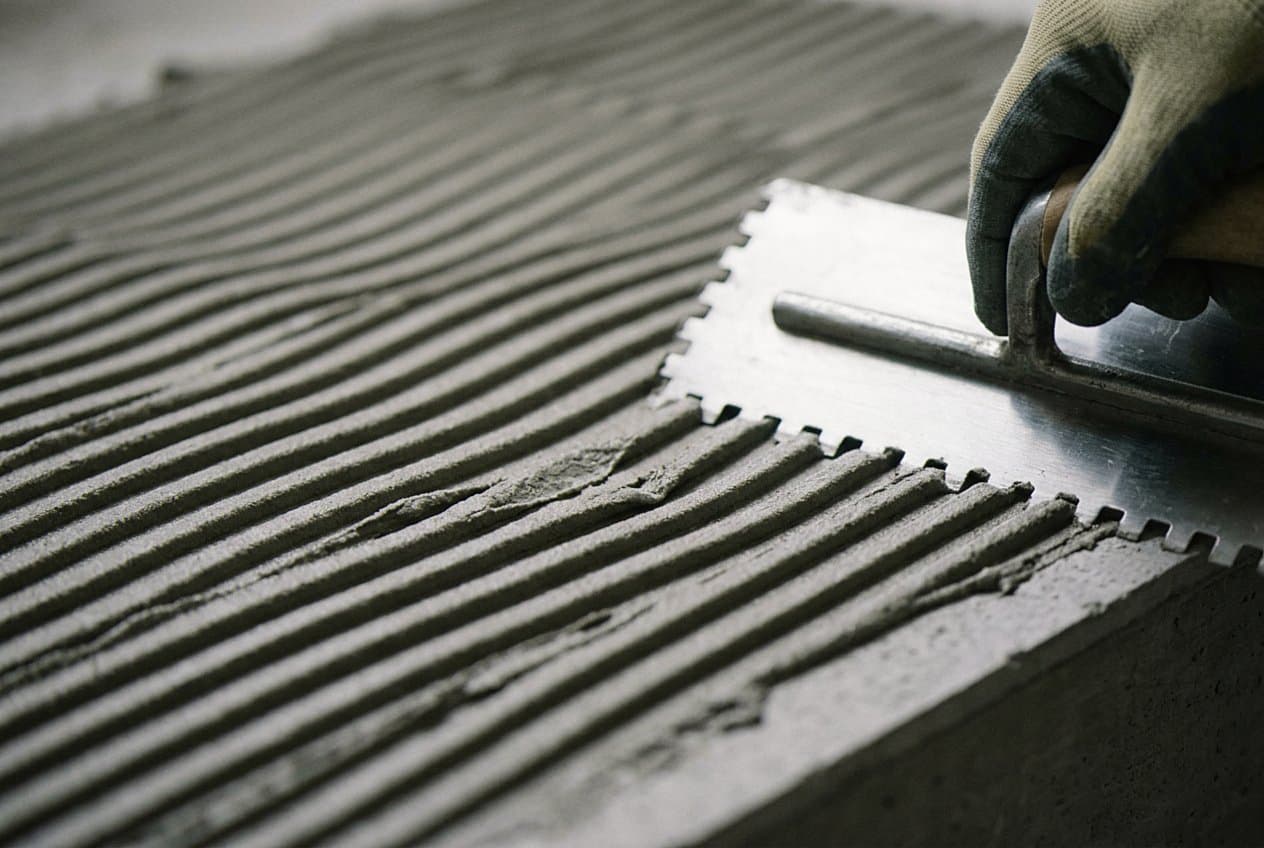
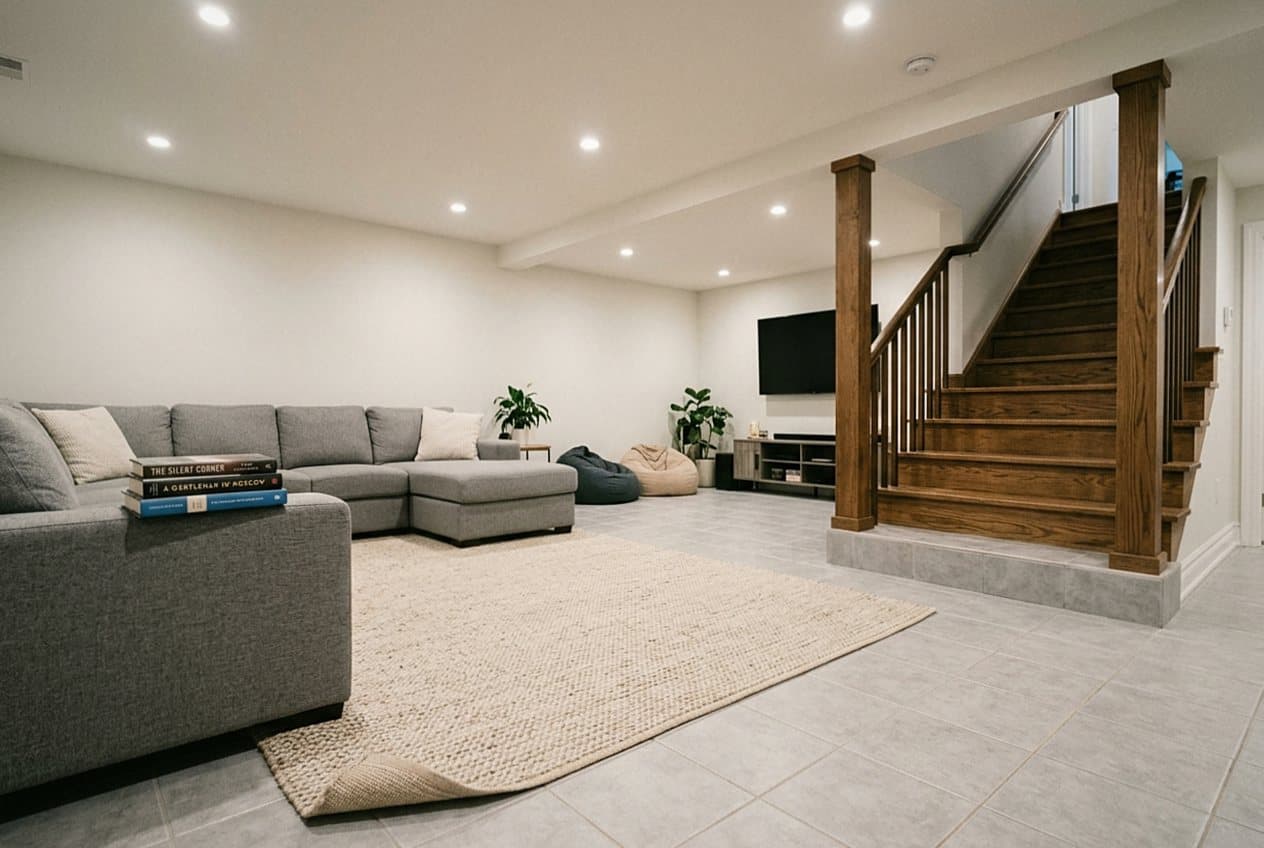
Here is how a normal Sterling Heights tile floor goes. We pull the old flooring and haul it out, whether that is carpet, sheet vinyl, or tile somebody set over a bad subfloor back in the nineties. Then the real prep starts. We screw down the loose subfloor, fill the low spots, and set an uncoupling or crack isolation layer where the room calls for one. That layer lets the wood below move with the seasons without dragging the tile along with it. Houses here swell in a humid July and shrink again in a dry January, and tile has no give at all, so that layer does the arguing for us. Next we snap our lines off the longest sight line in the room rather than off a wall, because almost every wall in a settled house is out of square somewhere. We dry lay the field so you can see where the cuts will land before anything is permanent. Then we set the tile, let it cure, grout it, and seal what needs sealing. Doorways get a metal or wood transition so the edge is flat under a bare foot. We vacuum the room, wipe the haze off, and take the debris with us.
- Subfloor prep is part of the job, so soft spots get fixed and dips get flattened first.
- A layer under the tile lets the wood below move all winter without cracking the floor on top of it.
- Layout snapped off the longest sight line, so the floor runs straight even where the walls are not square.
- Cuts land under toe kicks and along baseboards, where nobody looks, instead of out in a doorway.
- One crew start to finish, so the person who measured your floor is the one setting the tile in it.
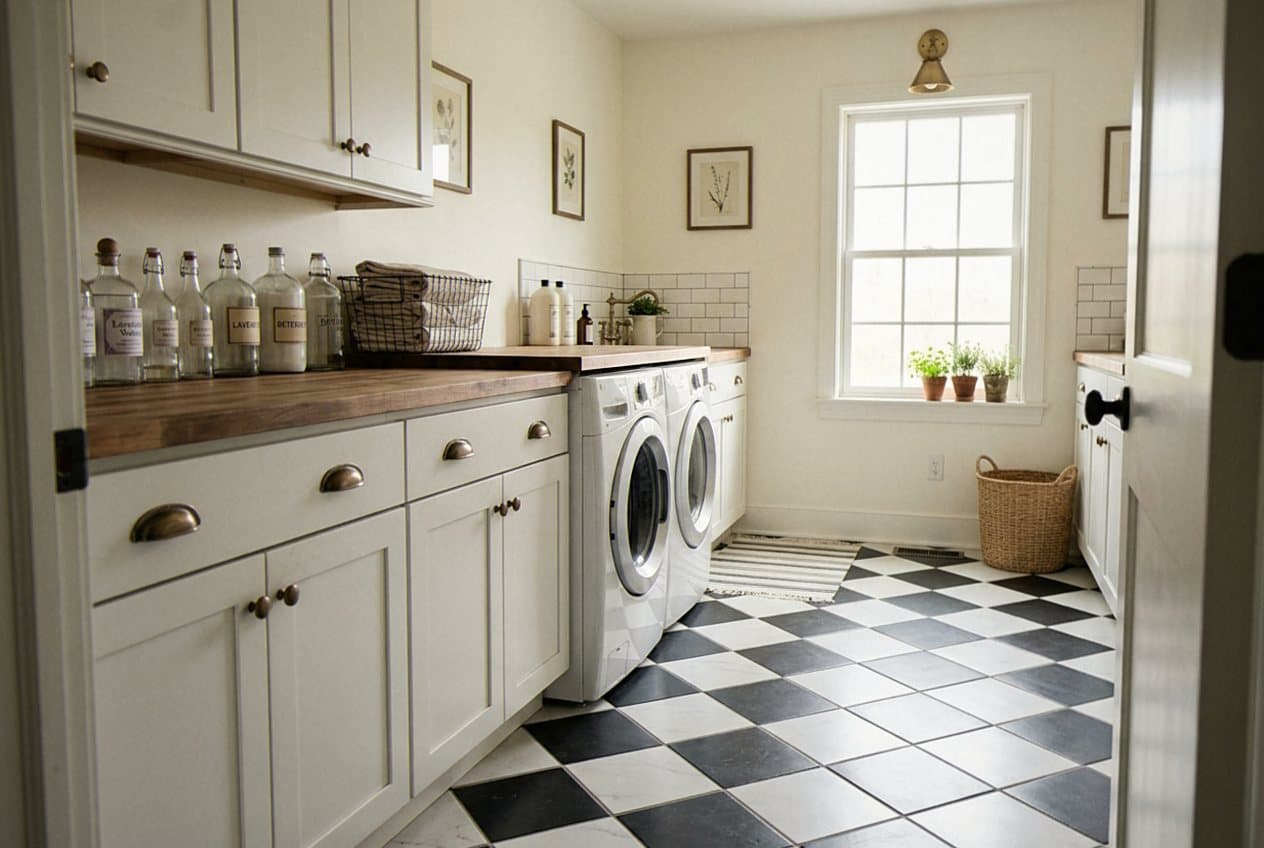
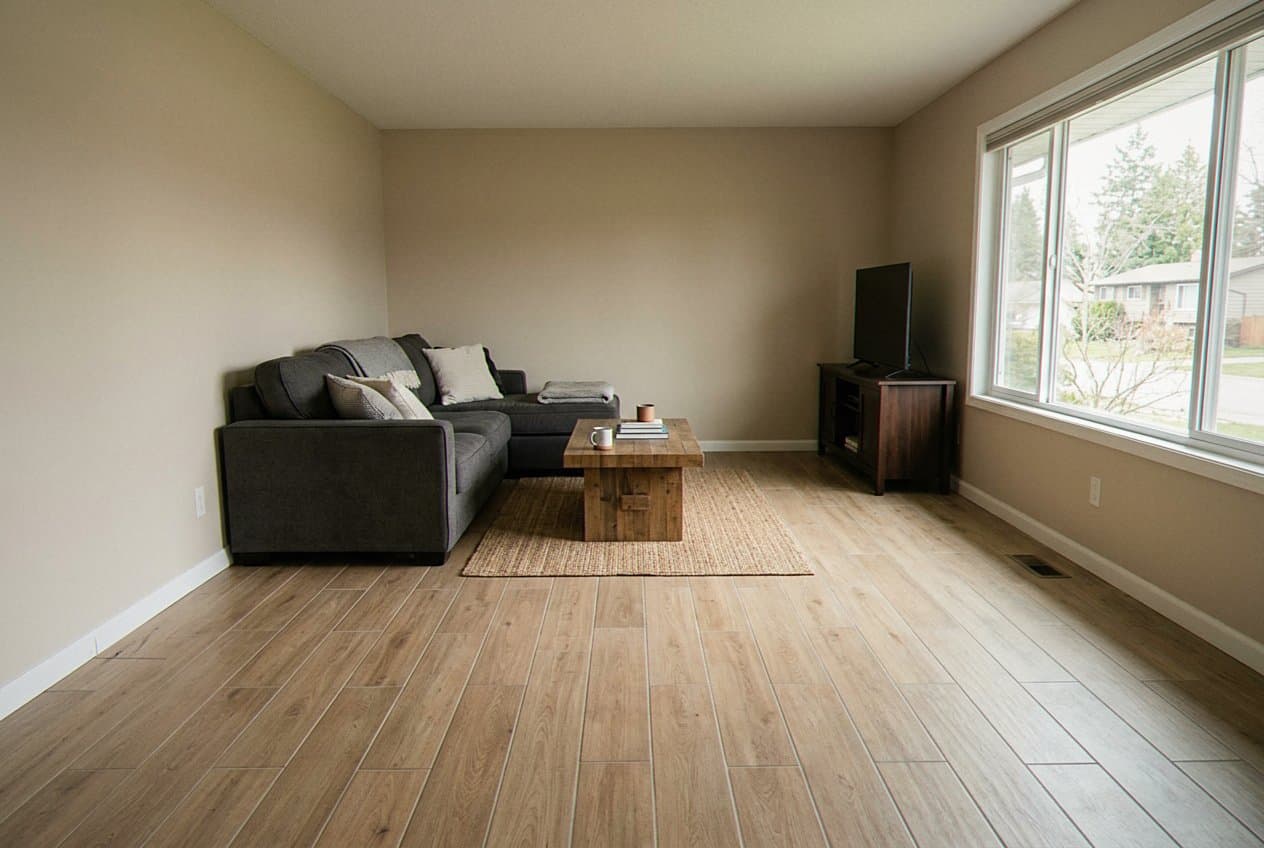
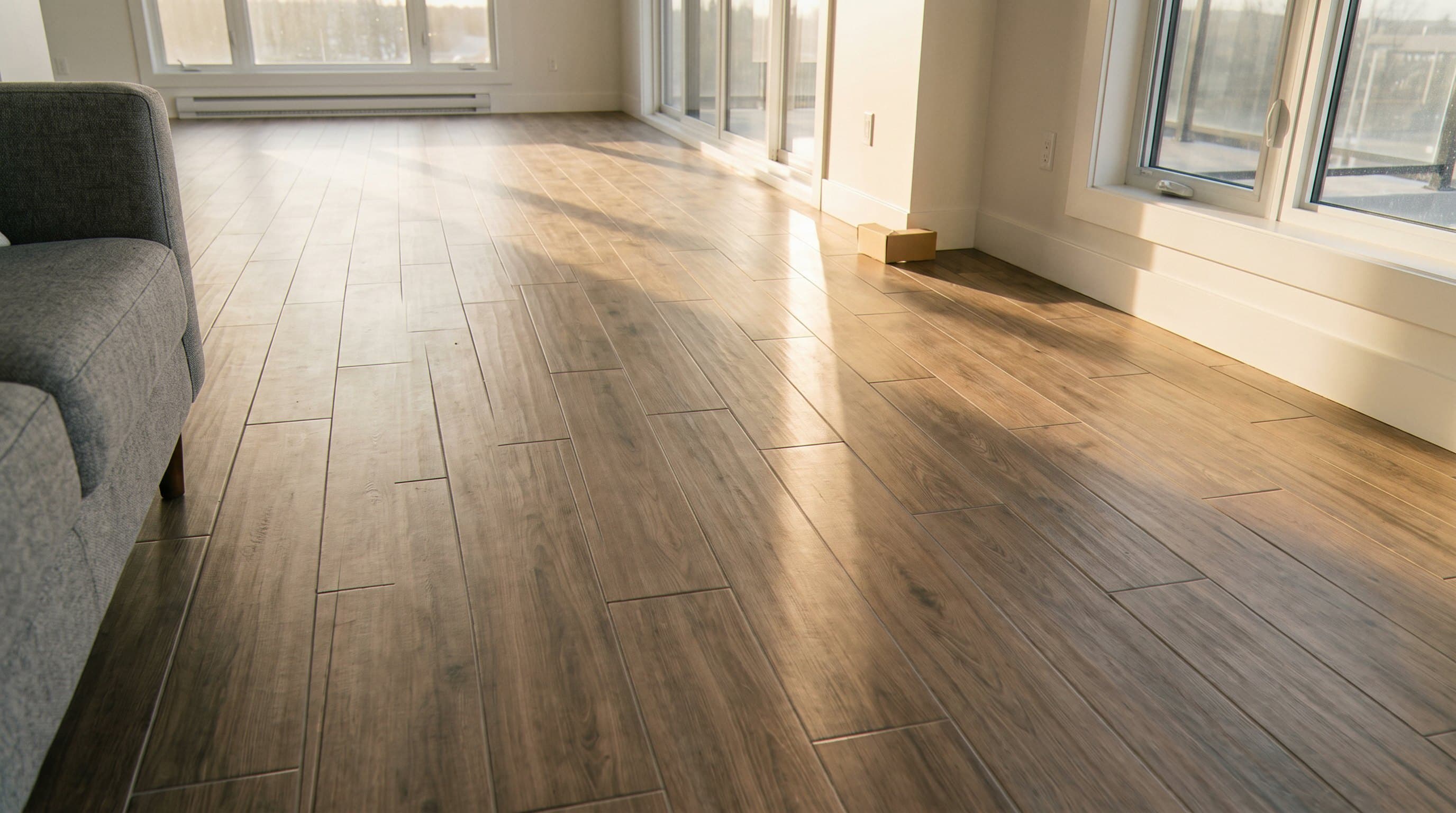
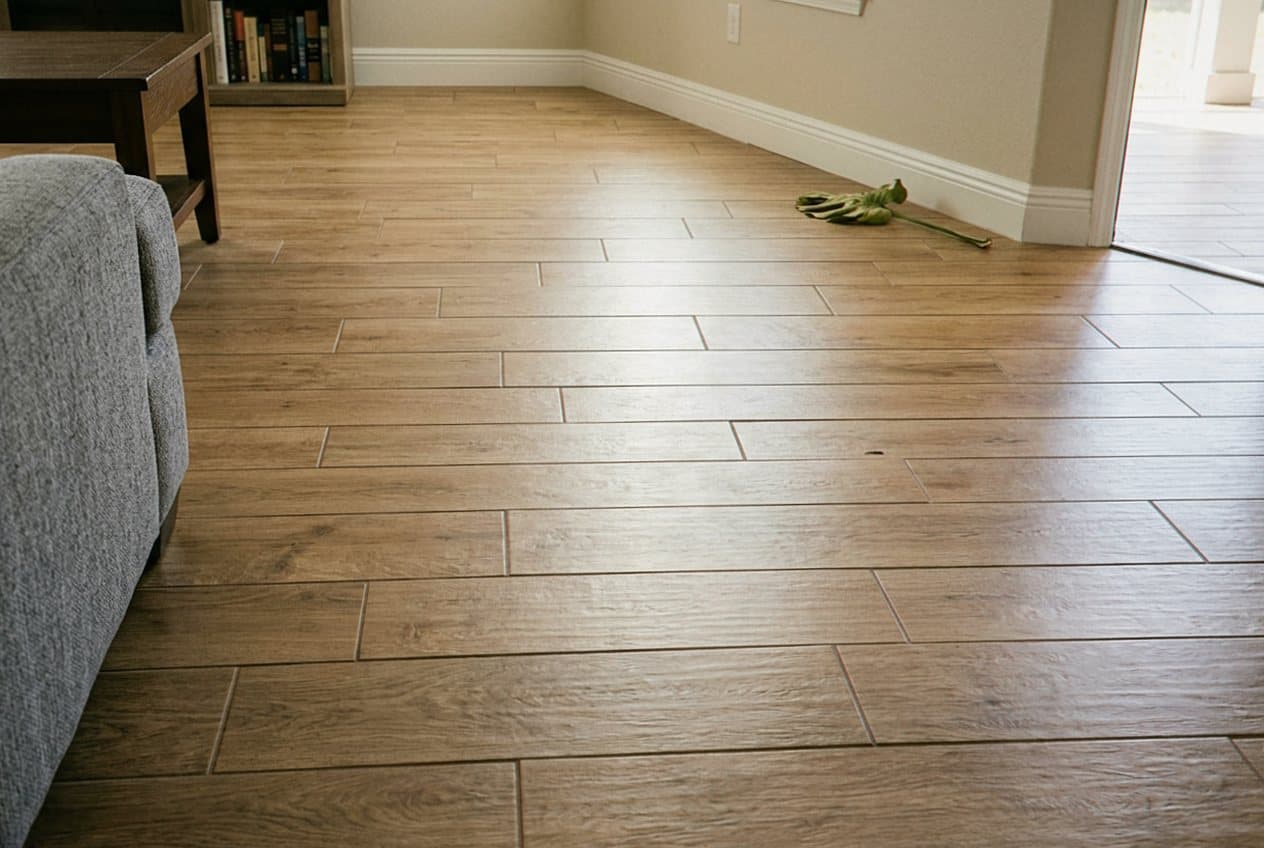
What you pick changes how the floor feels underfoot and how much work it asks of you later. Porcelain is what we set most often around Macomb County. It earns that spot. It is dense, it takes on almost no water, and it shrugs off the salt and slush that ride in on boots from November through March. Glazed ceramic costs less and does fine in a laundry room or a guest bath where the traffic is lighter. Natural stone brings warmth and movement that no printed tile really copies, though it is porous, so it wants sealing and gentler cleaners. Plank tile that reads like wood gives you that look in a room where a real board floor would be a poor idea, like a mudroom off the garage. We also set electric heat mats under tile far more than we used to. A warm bathroom floor in February sells itself. People bring it up to us years later. We will tell you plainly which of these suits your room, your traffic, and the way your family actually lives in the house.
Thinking about a tile floor in Sterling Heights, Utica, Shelby Township, Clinton Township, or anywhere else in Macomb County? Call us and we will come look at the room. We measure it, check what the subfloor is doing, walk through the tile and the layout with you, and give you a straight number. Nobody will push you to decide while we are standing in your kitchen. Most floors get on the schedule within a couple of weeks.